

The 5 Signers of the Declaration of Independence from New Jersey
Updated: Jun 23
55 of the 56 framers were bible-believing, church-attending Christians. The final paragraph in the Declaration reads as a prayer – “We appeal to the Supreme Judge of the universe...”
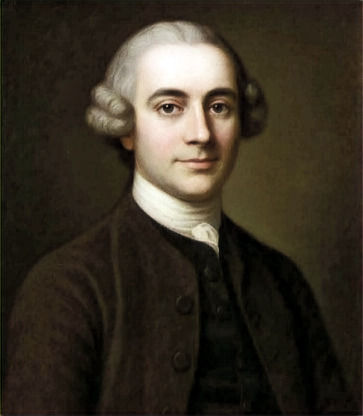 Born: Princeton, NJ Age when signing: 35 years old Religious Belief: Quaker Occupation: Lawyer Achievements: Justice of the New Jersey Supreme Court Sacrifices made during the Revolution When the British invaded New Jersey, Stockton hurried home to protect his family, moving them to the home of a friend. Ironically, he was captured there. A party of refugee royalists, pulled Stockton from his bed, carried him to New York, treated him with indignity, and threw him into a common prison. Stockton's property at Morven was destroyed by the Red Coats, his library burned, his fine blooded horses taken for officer's mounts. While he was released, his health had been compromised, his lands devastated, his papers and library burned, and his stock was seized and driven away leaving him destitute. |
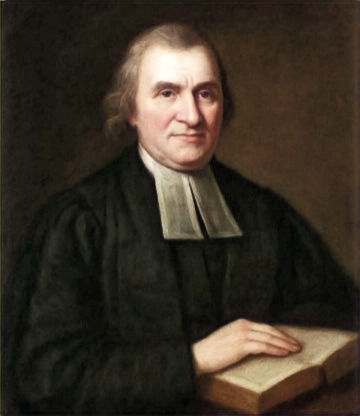 Born: Gifford, Parish of Yester, East Lothian, Scotland Age when signing: 53 years old Religious Belief: Presbyterian Occupation: Minister Achievements:
President of the College of New Jersey (Princeton University)
Sacrifices made during the Revolution In 1777, his son was killed at the Battle of Germantown, and later that year, his home and library were ransacked and burned by British and Hessian soldiers. Part of the Battle of Princeton in 1777 was fought on the college campus – the college was so badly damaged that it was closed for several years. After the Revolutionary War, he continued to serve as President of the College of New Jersey, and spent several years working to rebuild the college.
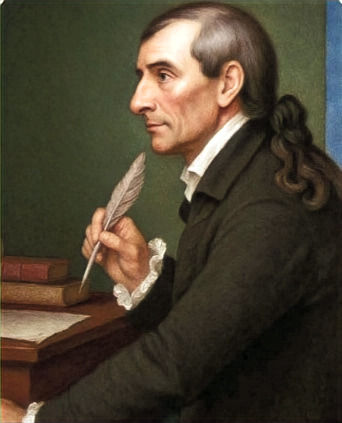 Born: Philadelphia, PA Age when signing: 38 years old Religious Belief: Episcopalian Occupation: Lawyer, Musician Achievements: United States Federal Judge on the District Court for the Eastern District of Pennsylvania Sacrifices made during the Revolution Before the war, Hopkinson held lucrative royal appointments, including working as a customs collector. He sacrificed this stable income and financial security when he chose to side with the revolution. In 1776 and again in 1778, British and Hessian troops looted his home in Bordentown, New Jersey. They stole or destroyed his scientific instruments, furniture, and prized personal library. During the invasions, Hopkinson and his family were forced to abruptly flee their home, leaving all their worldly possessions behind to evade capture. In May 1778, the British torched several patriot homes in Bordentown, including the estate of Hopkinson's father-in-law directly across the street. British soldiers ignited Hopkinson’s house as well. However, according to historical accounts, a Hessian captain entered the home and was so impressed by the intellect displayed in Hopkinson's library and mathematical instruments that he declared him a "very learned man" and ordered the fires to be extinguished, saving the structure. Hopkinson designed the American Flag, the Great Seal of the United States, Continental paper money, and various department seals. Congress denied his petition for payment, claiming that others had also contributed to the symbols and that he was already receiving a government salary as a public official.
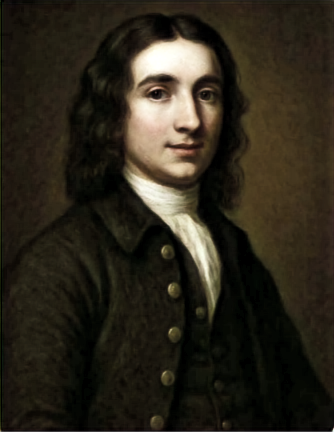 Born: Hunterdon Co., NJ Age when signing: 65 years old Religious Belief: Baptist Occupation: Land Owner Achievements: First Speaker of the New Jersey General Assembly
Sacrifices made during the Revolution Hart was forced to flee his Hopewell homestead and spent nearly a year living as a fugitive in the Sourland Mountains, surviving in forests, barns, and caves.
While evading British capture, his wife passed away. His prosperous 400-acre farm, fields, and gristmill were raided, looted, and laid waste by Hessian soldiers.
When he returned home he found his wife dead and his family scattered. In 1778, 12,000 Continental soldiers camped on his fields, ruining his crops to feed George Washington’s army prior to the Battle of Monmouth.
|
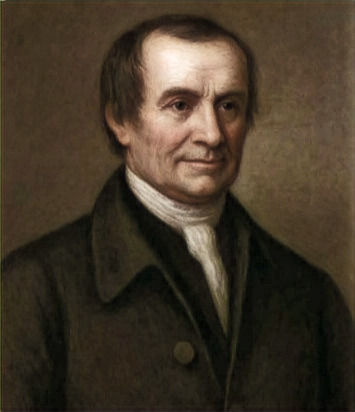 Born: Elizabethtown, NJ Age when signing: 50 years old Religious Belief: Presbyterian Occupation: Lawyer, Surveyor Achievements: U.S House Representative for New Jersey's At-Large District Responsible for getting the word 'Liberty' stamped onto U.S. coinage Sacrifices made during the Revolution Two of Clark's sons, Aaron and Thomas, served in the Continental Army artillery and were captured by the British. They were thrown aboard the infamous HMS Jersey, a brutal prison ship anchored in New York where thousands died. In solitary confinement, Captain Thomas Clark survived only on scraps of food fellow inmates could squeeze through his cell door's keyhole. The British offered to free his sons if Clark recanted his signature on the Declaration of Independence and defected to the Loyalists. He refused, placing his allegiance to the new nation above his own children. |


Comments